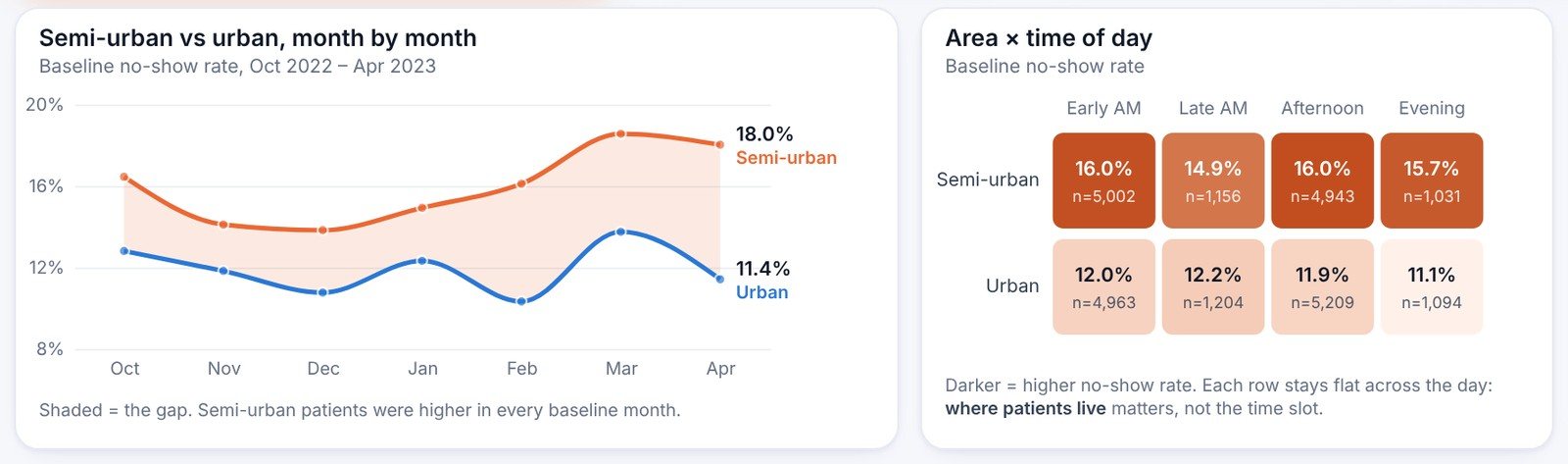
It’s where patients live, not when they book.
Semi-urban patients missed 15.9% of appointments, against 11.9% for urban patients, in every month and every time slot. They hold about half of the baseline appointments and 56% of the missed fees.
About one in seven patients missed their appointment. An enhanced reminder cut semi-urban no-shows by a fifth, worth about BDT 0.87M a year.

Where do missed appointments concentrate, and does a better reminder fix them?
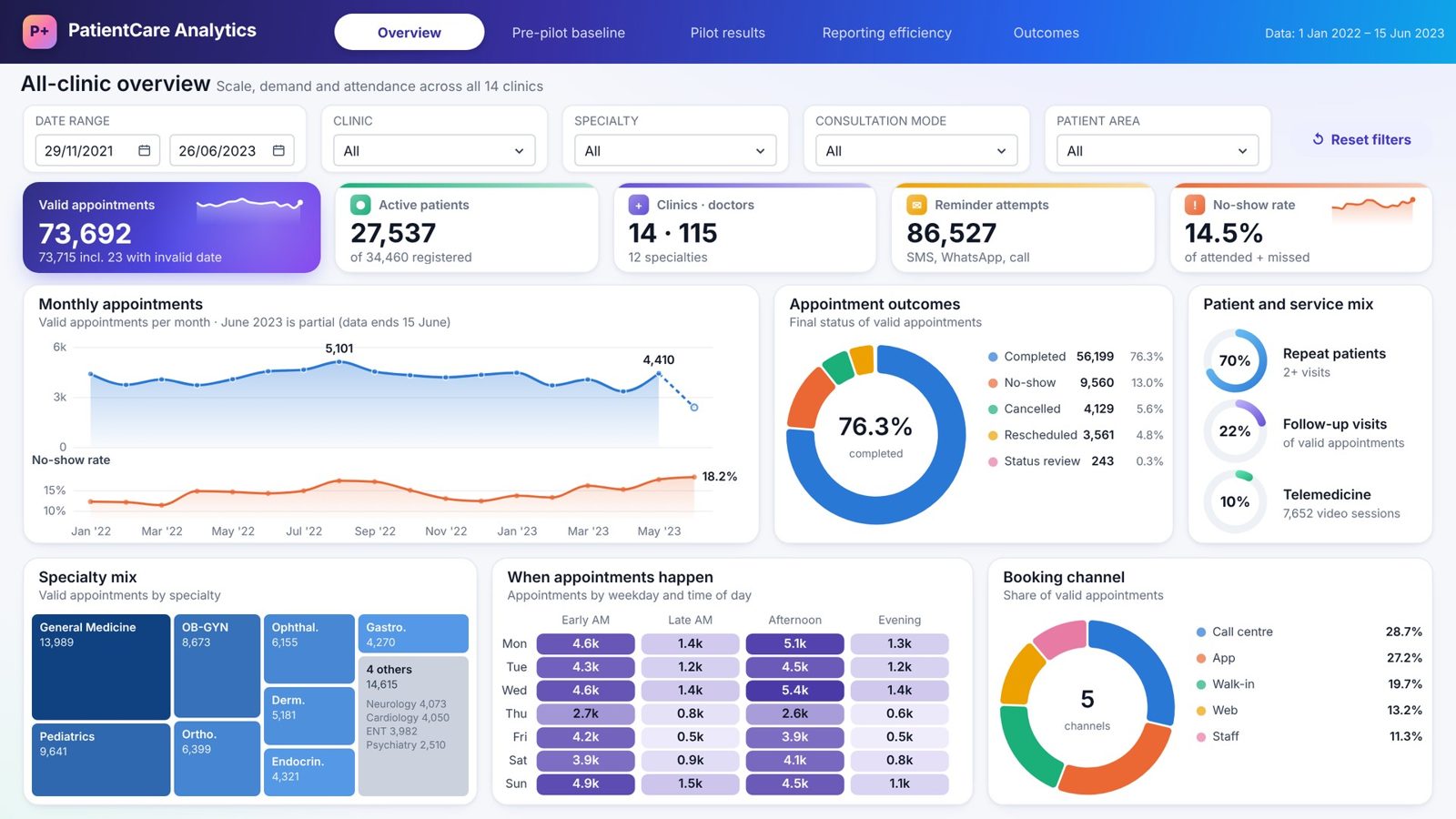
PatientCare is an outpatient network of 14 clinics in Bangladesh, with 115 doctors and 34,460 registered patients. From January 2022 to mid-June 2023 it booked 73,692 appointments, and about one in seven booked patients did not turn up. Working with the operations team, I brought 12 data sources (557,423 records) into one reporting model.
Semi-urban patients missed 15.9% of appointments, against 11.9% for urban patients, in every month and every time slot. They hold about half of the baseline appointments and 56% of the missed fees.
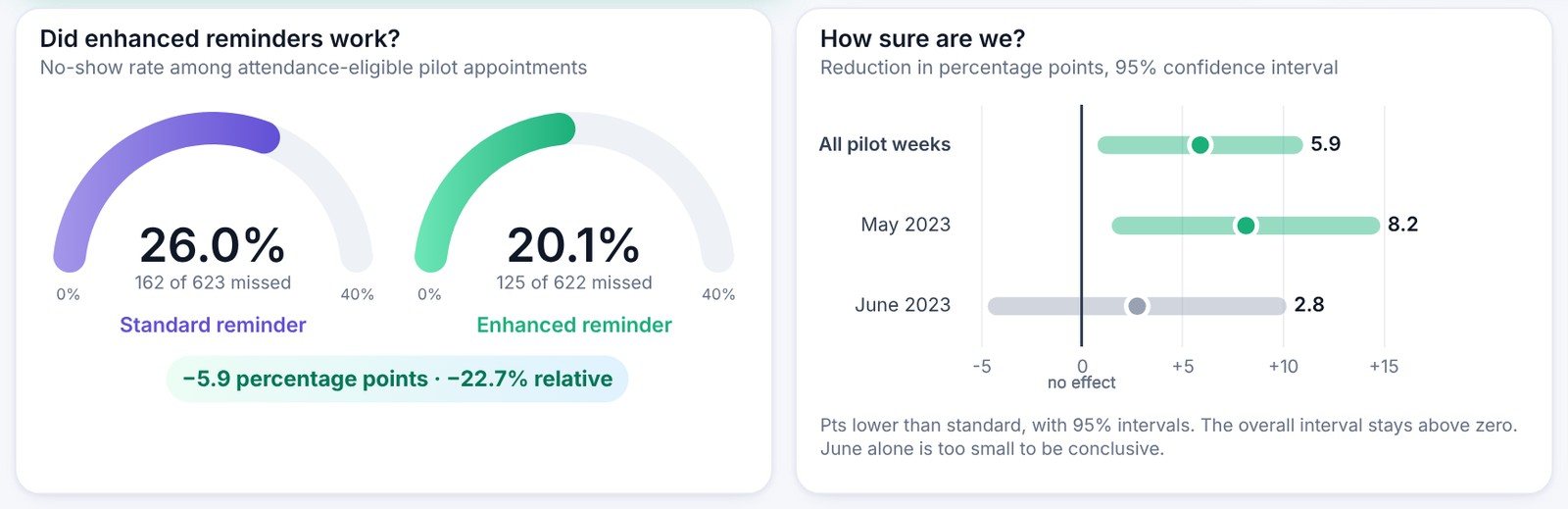
A 24-hour message plus a 2-hour follow-up cut semi-urban no-shows from 26.0% to 20.1% in a six-week pilot. The 1,409 appointments were split 1:1 within each clinic and month, so both groups faced the same clinics and months.

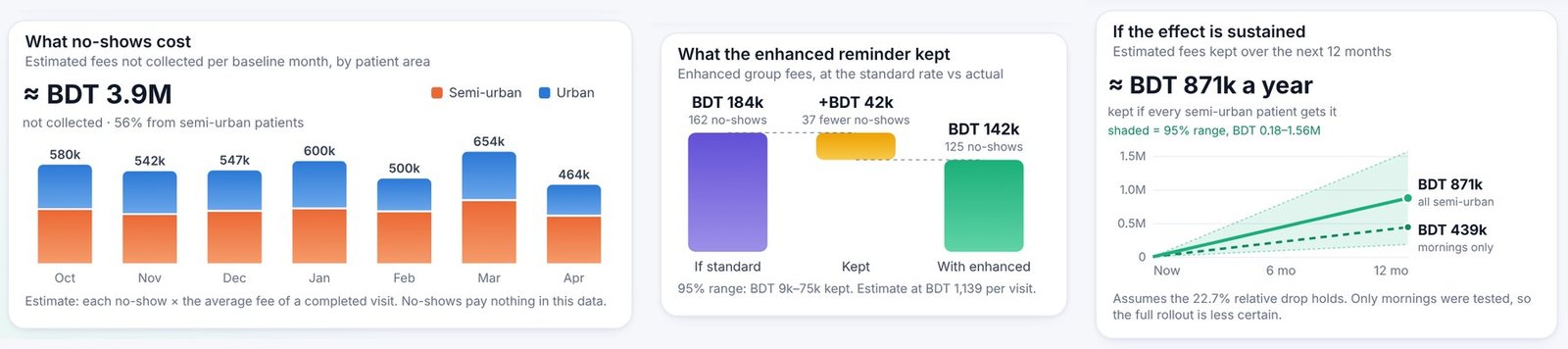
At BDT 1,139 per missed visit, no-shows cost about BDT 3.9M in fees over the seven-month baseline. The pilot kept about BDT 42k in six weeks; rolled out to every semi-urban patient, it would keep about BDT 0.87M a year.

The enhanced reminder for all semi-urban morning appointments: about BDT 0.44M a year in fees kept.
Semi-urban afternoon and evening slots, up to about BDT 0.87M a year in total. Then pilot walk-ins and same-day bookings (17.7% and 17.0%).
Keep a small standard-reminder comparison group, review failed reminders monthly, and re-measure after six months.